
How Many Hours of Wedding Photography Do You Really Need
A Conversation We’ve Had Hundreds of Times
It usually starts the same way. We’re sitting with a couple, sometimes over coffee, sometimes walking a venue as the light begins to soften in the late afternoon, and the question comes up almost casually.
So… how many hours do we actually need?
There is always a pause after that. Not an awkward one, just the kind that carries a little uncertainty. Because what sounds like a simple question is actually tied to something much bigger. It is not really about hours. It is about how the day will feel, how it will unfold, and what pieces of it will still be there years from now when everything else has settled into memory.
We have had this conversation more times than we can count across weddings all over San Antonio and beyond, and every time it feels a little different because every couple brings their own rhythm, priorities, and vision into it.

Why “Hours of Coverage” Feels So Confusing at First
Most couples are planning a wedding for the first time, so there is no real reference point for how long a day like this actually feels. Eight hours sounds like a long time in everyday life. Six hours can feel like plenty when you are thinking about a typical event.
But a wedding day does not move like a typical day. It stretches and compresses in ways that are hard to predict. There are moments that pass in a blur and others that feel suspended in time. When couples hear coverage described in hours, it can feel a little like trying to measure something emotional with a stopwatch.
We have found that what couples are really trying to understand is not the number itself, but what that number allows them to hold onto.

The First Question Every Couple Asks: “How Many Hours Do We Actually Need?”
We always smile a little when this comes up, because the honest answer is that it depends on what you want your story to feel like when you look back on it.
Some couples imagine the day beginning with the ceremony and ending shortly after the first dances. Others want to remember the quiet anticipation in the morning, the way the room felt while they were getting ready, the laughter that builds slowly before everything begins.
We once photographed a wedding where the morning quickly turned into a full blown content creation session. The bride had a vision and her bridal party was all in, phones out, music playing, everyone taking turns filming quick clips together. There was laughing between takes, a little friendly competition over who nailed it best, and just enough chaos to make it unforgettable. At one point they were all gathered in matching robes, trying to sync up the same move and completely losing it when it fell apart. Those were some of the favorite moments from the entire day, not because they were perfectly planned, but because they captured the energy of her friendships in such a fun and real way.
That part of the story would not have existed in a shorter window of coverage. Not because anyone made the wrong choice, but because it simply lived outside of it.

“What Do We Miss If We Choose Fewer Hours?”
This is where the conversation often shifts from numbers to meaning.
When coverage is shorter, the focus naturally tightens around the most structured parts of the day. The ceremony, the key reception moments, the parts everyone expects. And those are important. They deserve to be documented beautifully.
But weddings are not only made of those moments.
There is a kind of quiet magic that lives in the in between. A parent stepping into the room and pausing for just a second when they see their child dressed for the ceremony. A group of friends adjusting ties and sharing stories that only make sense to them. The way a couple exhales together after the ceremony when everything finally settles.
These are the moments that tend to slip away when time is limited, not because they are less important, but because they are less predictable. They do not wait for a schedule. They happen naturally, and they ask for a little space to exist.

“Do We Need Coverage for Getting Ready?”
We have heard every version of this question. Sometimes it is practical, sometimes it is hesitant, and sometimes it comes with a little bit of uncertainty about whether those moments will really matter later.
What we have seen over the years is that getting ready often carries more emotional weight than couples expect. It is the beginning of the story. The place where everything still feels a little unreal, where anticipation builds quietly before the day takes on its full energy.
There was a morning in San Antonio where the bride sat alone for a few minutes before anyone else arrived. The room was still, the dress hanging nearby, the kind of calm that only exists right before something meaningful begins. When we delivered the gallery, she told us she had forgotten that moment entirely until she saw it again.
That is the thing about this part of the day. It is not always about big reactions or dramatic moments. Sometimes it is about preserving the feeling of it.

“Can We Fit Everything Into 6 or 8 Hours?”
The short answer is that you can fit a lot into that amount of time. The longer answer is that it often requires choices.
In San Antonio, many weddings lean into late afternoon ceremonies, especially when the light begins to soften and the heat eases. That means much of the earlier part of the day, including details and getting ready, happens well before the ceremony begins. If coverage starts later, those moments may not be included.
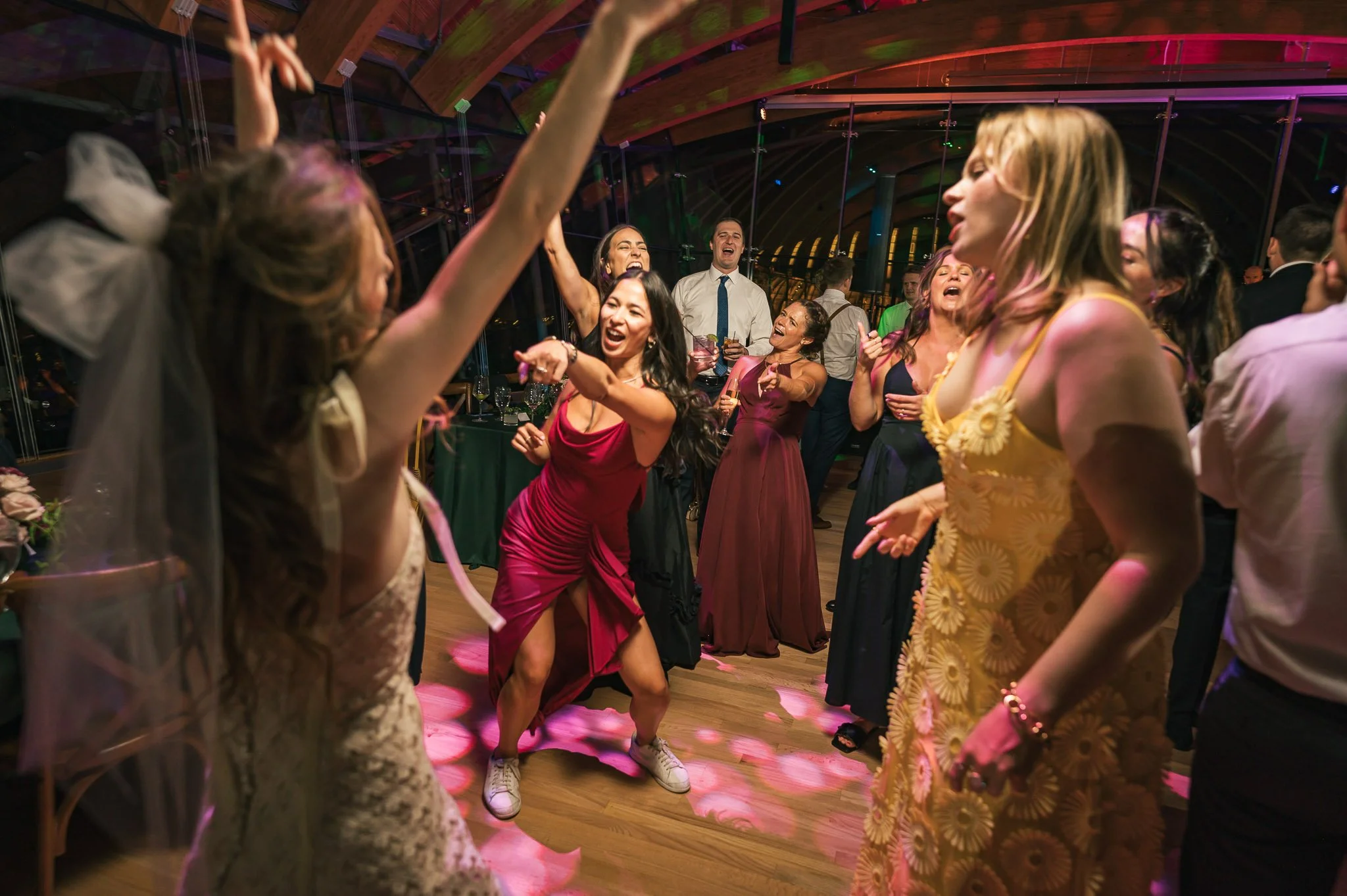
At the same time, if the goal is to capture a full reception experience, from the first dance through an energetic dance floor or a meaningful exit, that also takes time. When everything is compressed, the day can start to feel like it is moving quickly from one moment to the next without much room to breathe.
We have worked with couples who made shorter coverage work beautifully by simplifying their timelines and focusing on what mattered most to them. We have also worked with couples who realized afterward that certain parts of the day passed too quickly to fully take in.
Neither experience is wrong. They are just different ways of remembering.

“What Does All Day Coverage Actually Mean?”
All day coverage is less about a specific number and more about a feeling.
It feels like not having to watch the clock. Like being able to stay present in whatever moment you are in without wondering what is next or what might be missed. It allows the day to unfold naturally, with all of its small shifts and unexpected moments.
We remember a wedding where the air shifted just as the sun disappeared, that quiet moment when everyone realizes it is going to be a cooler night than expected. At first it was subtle, guests pulling their jackets a little closer, lingering near the patio instead of heading back inside. Then someone had the idea to light the fire pit.
What started as a small flicker quickly became a gathering place. Chairs were pulled closer, drinks in hand, laughter rising a little easier in the glow of the fire. The couple found themselves there too, tucked in with their favorite people, completely unplanned and completely relaxed. At one point, they were roasting marshmallows, still dressed in their wedding attire, laughing at how unexpected it all felt.
Because there was time, nothing felt rushed or lost. That moment became one of the most memorable parts of their story.

“When Should Photography Start and End?”
This is where the shape of the day begins to come into focus.
Start times are often guided by the pace of the morning. Hair and makeup, details, those first interactions with family or friends. Ending times tend to be tied to how the evening unfolds, whether that includes a full dance floor, a private last dance, or a send off surrounded by everyone you love.
What matters most is not hitting a specific hour, but allowing the beginning and ending of your story to feel complete. When couples look back, they rarely think about when coverage started or ended in a technical sense. They remember whether the story feels whole.
“What If Our Timeline Changes on the Wedding Day?”
It almost always does, at least a little.
Hair and makeup might run late. A family member may need a few extra minutes. The energy of the reception might build more slowly or stretch longer than expected. These shifts are part of what makes each wedding unique.
What we have found is that flexibility makes a difference not just in what is captured, but in how the day feels. When there is space for things to adjust naturally, couples tend to stay more present and less focused on the clock.
Some of our favorite images have come from moments that were never planned. They happened because there was time to notice them.
“Is It Worth Investing in More Hours?”
This question is never really about hours. It is about how you want to remember your wedding day.
Long after the timeline is gone and the details have faded, what remains are the moments that felt real. The connections, the emotions, the atmosphere of the day as it unfolded. Time shapes how much of that story can be held onto.
We have had couples tell us they wish they had more coverage because certain parts of the day now feel like a blur. We have also had couples tell us they were grateful for every extra moment that was preserved, especially the ones they did not expect to matter as much as they did.
There is no perfect answer that fits everyone. There is only the one that aligns with how you want your story to feel.

A Story That Brings It All Together
There was a wedding not long ago where everything about the day felt unhurried. The morning began slowly, with laughter echoing through the rooms as everyone got ready. The ceremony was held as the sun began to dip, casting a warm glow across the space. The reception carried on into the night, with moments of quiet conversation mixed in between bursts of energy on the dance floor.
At one point, the couple stepped away for a few minutes, just the two of them. No one noticed. No one needed to. They stood together under soft lighting, taking in everything that had happened.
When they saw their gallery, that moment stood out to them more than almost anything else. Not because it was planned, but because it was real.
And that is what time allows for. Not just more images, but more space for the day to unfold in a way that feels true to you.
Closing: Finding the Right Fit for Your Day
If there is one thing we would gently offer, it is to think about your wedding not in terms of hours, but in terms of story. What moments matter to you. What parts of the day you want to hold onto. How you want it all to feel when you look back.
The right amount of coverage is the one that allows your day to be experienced fully, without feeling rushed or incomplete. It is not about fitting into a number. It is about giving your story the space it deserves.
If you are in the middle of figuring all of this out, we would love to hear what you are dreaming up. You can learn more about us and see full wedding stories on our blog, and when you are ready, reach out through our contact page. We would be honored to walk through this part of the journey with you.