
Why We Shoot Black-and-White at Weddings
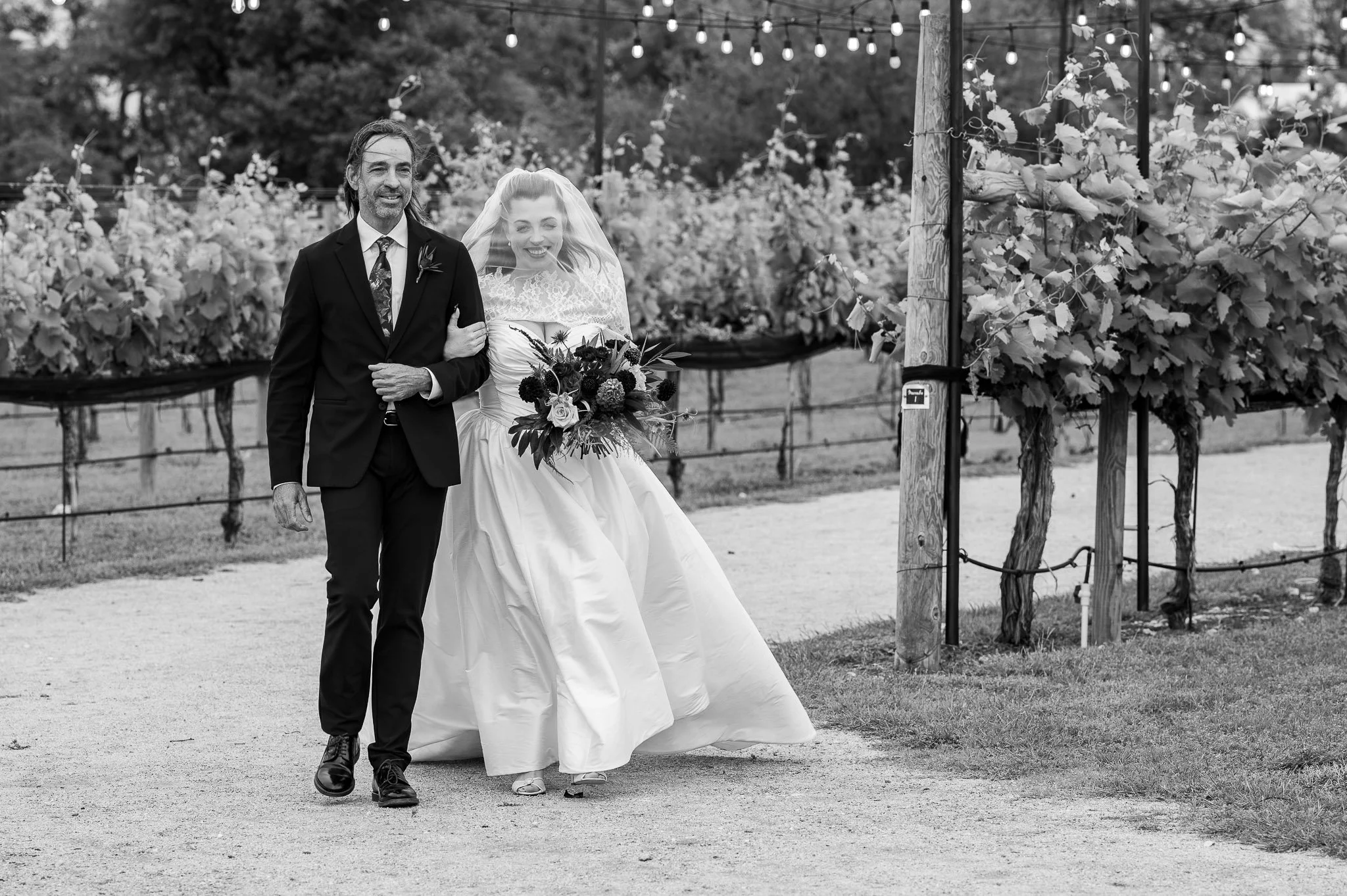
Every wedding we photograph is captured in color. The black-and-white images a couple eventually sees are not shot that way in the moment. They are chosen that way afterward, during editing, once we can look at the full day and decide which photographs are actually about color and which ones are about something else.
What Black-and-White Removes
Color tells you what things look like. Black-and-white tells you what they feel like.
A wedding is full of color choices that were made by someone else: a bridesmaid dress in a shade the couple picked eight months ago, a linen color chosen by a venue coordinator, string lights that cast everything in amber. None of that is wrong, and in color, it's part of the story. But when we sit down to edit and a photograph turns out to be about something other than its setting, color can get in the way of that. A father's expression before he sees his daughter. The grip of two hands during vows. The exhaustion and joy on a couple's face at eleven at night when the room has mostly cleared out. In moments like these, removing color during editing often reveals more than color ever did.

Weddings Are Temporary. Some Photographs Shouldn't Be.
Wedding trends move fast. The color palette that feels current this year will look dated in five. Lighting styles shift. Editing trends shift even faster. A photograph that leans hard into a specific color trend becomes, eventually, a photograph of that trend, not of the day itself.
Converting an image to black-and-white during editing sidesteps that. It has looked the same for over a century, which means a black-and-white photograph from a wedding this year sits comfortably next to one from 1975 or 2040. It does not compete with trends because it opted out of that competition from the start. For couples who want photographs that still feel honest to look at decades from now, that matters more than it seems to on the wedding day itself.

When We Choose Black and White Most Often
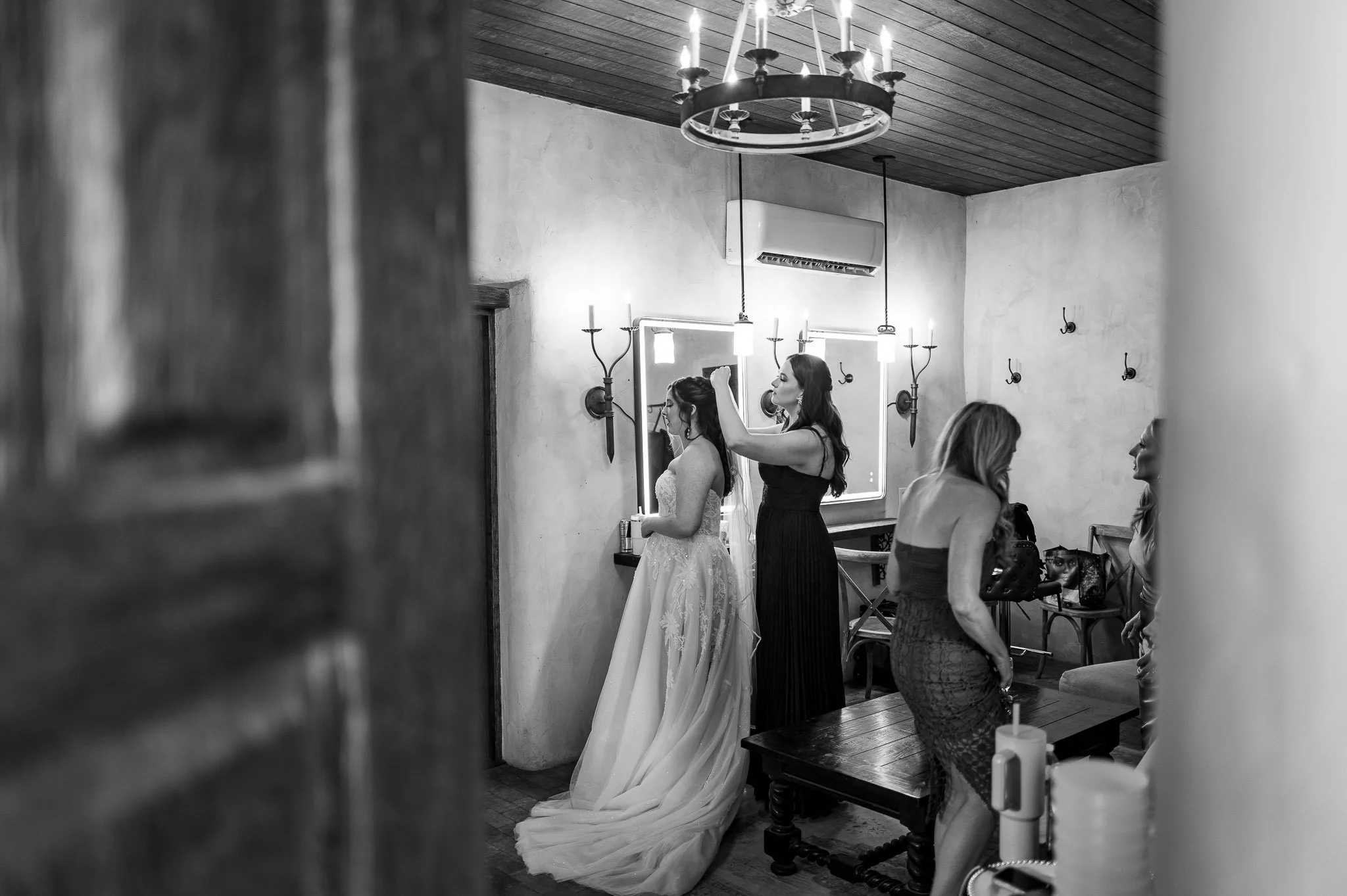
Q: Do you shoot getting-ready photos in black and white? A: Often, yes. The hour before a wedding starts is usually the most unguarded part of the day, and these frames tend to work best without the visual noise of a busy hotel room or a bridesmaid's robe color competing for attention.
Q: What about the vows and ceremony? A: This is usually the emotional center of the day. When we review it afterward, it often benefits from a treatment that removes anything visually competing with the two people at the center of it.
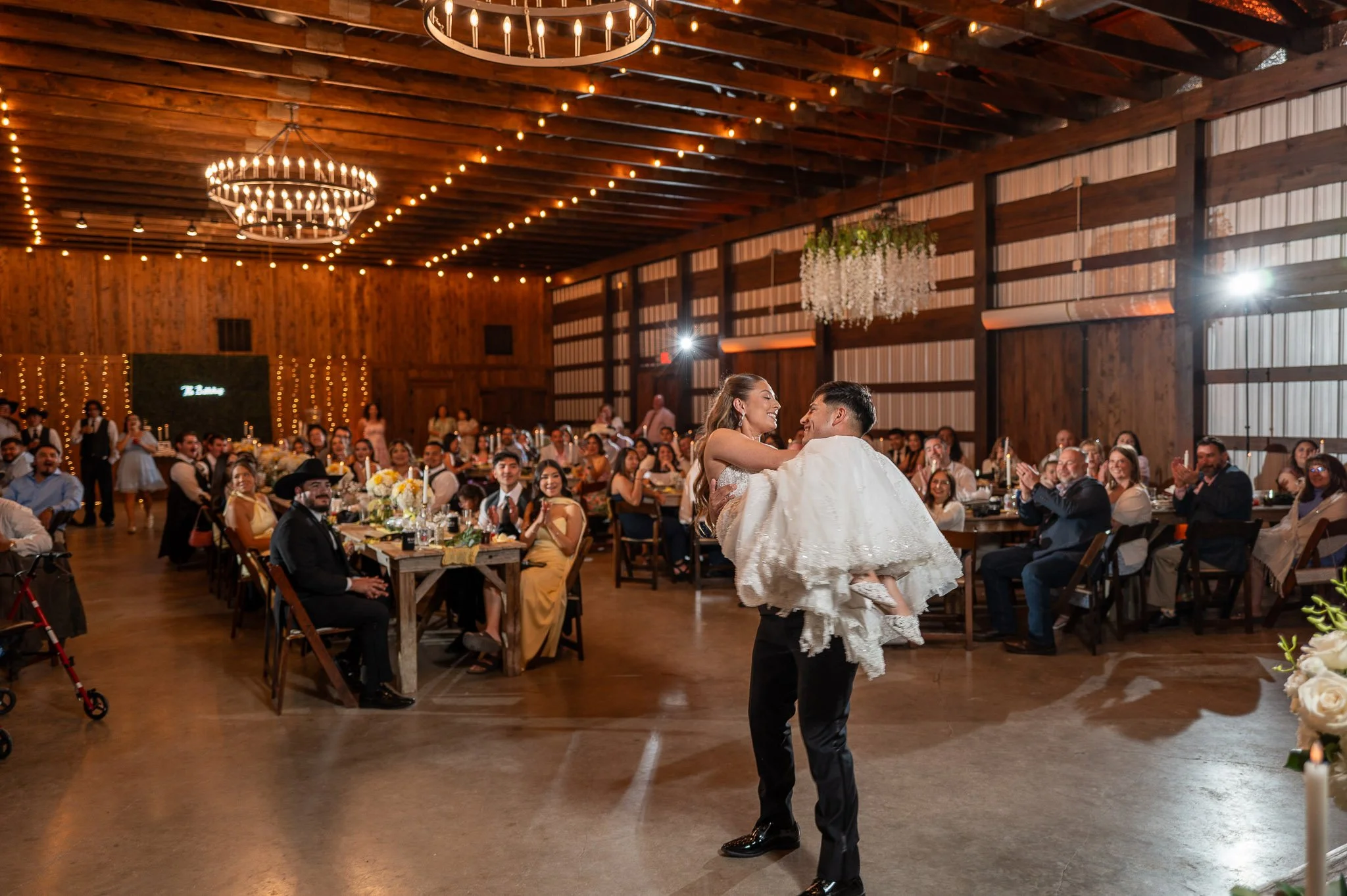
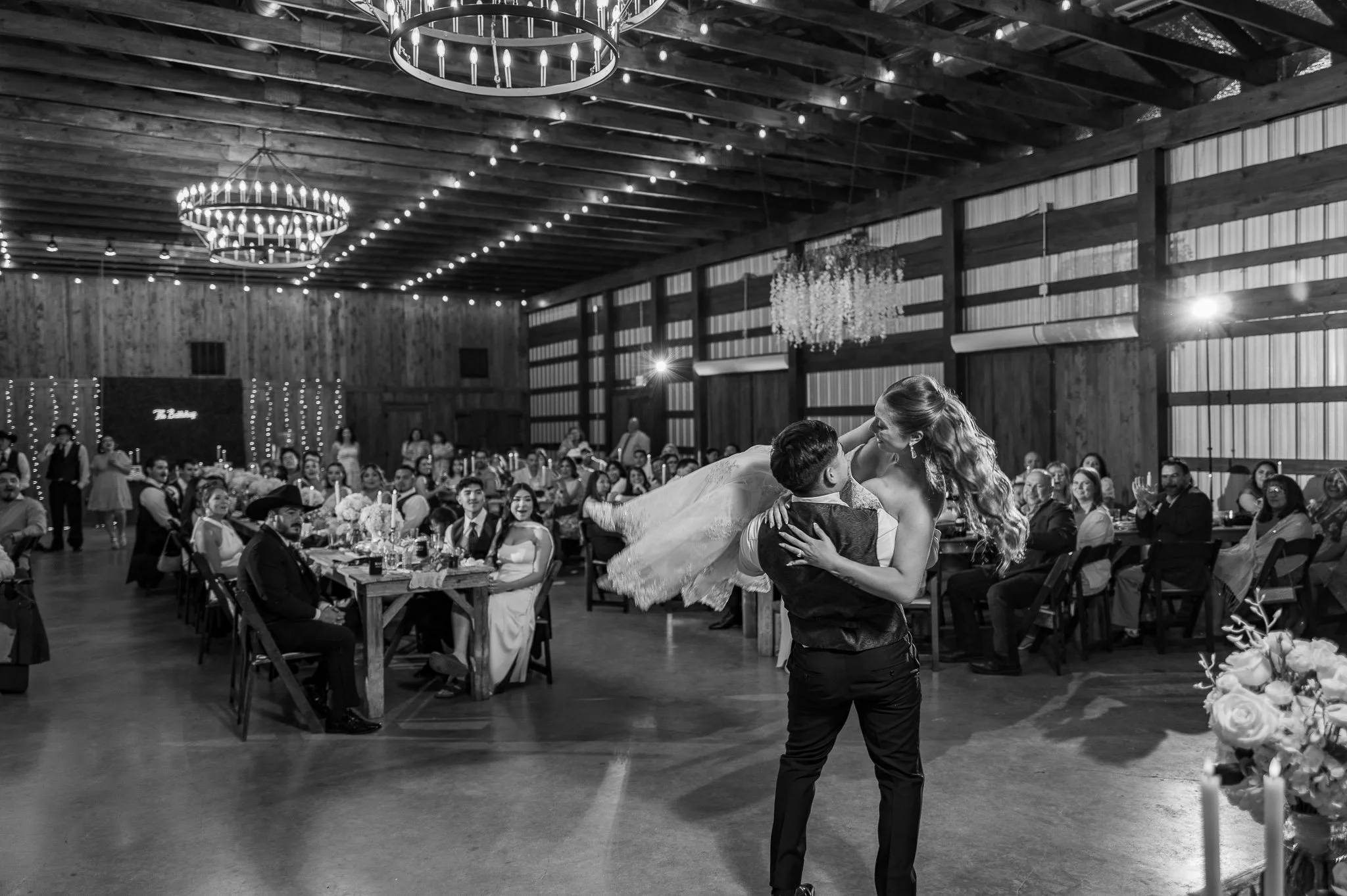
Q: Do you shoot the reception in black and white too? A: Sometimes, especially late in the night once the posed portion of the day is over. What's left, dancing, exhaustion, the small group still on the floor, tends to hold up better in black and white than in color.
Black-and-White Is Not a Rejection of Color
We want to be clear about one thing: converting certain images to black-and-white is not a statement against color photography. The two do different jobs. Color carries information: the flowers a couple spent months choosing, the venue's architecture, the specific gold of late-afternoon light in Texas Hill Country. Those frames stay in color, and they belong in the story.
Black-and-white carries something else. It carries feeling without the distraction of description. When we're editing and deciding which treatment a moment deserves, the question we ask is simple: is this photograph about what something looked like, or about what it felt like. The answer usually tells us which version to deliver.
A Style Rooted in How We Edit a Wedding, Not a Trend We Followed
We didn't start converting images to black-and-white because it was popular. We do it because, once a wedding is shot and we're looking back through the full day, it's one of the more honest tools available for presenting a day that is, underneath all the planning, mostly about a handful of people feeling something in front of the people they love. Color will always carry most of that story. But black-and-white is often how we present the parts of it that matter most.
IIf you're planning a wedding in San Antonio or the Texas Hill Country and want your gallery approached with that kind of care for black and white, we'd be glad to talk with you about it.