Photo and Video at a Proposal: Dalton and Hailey at the Japanese Tea Garden Pedestrian Bridge
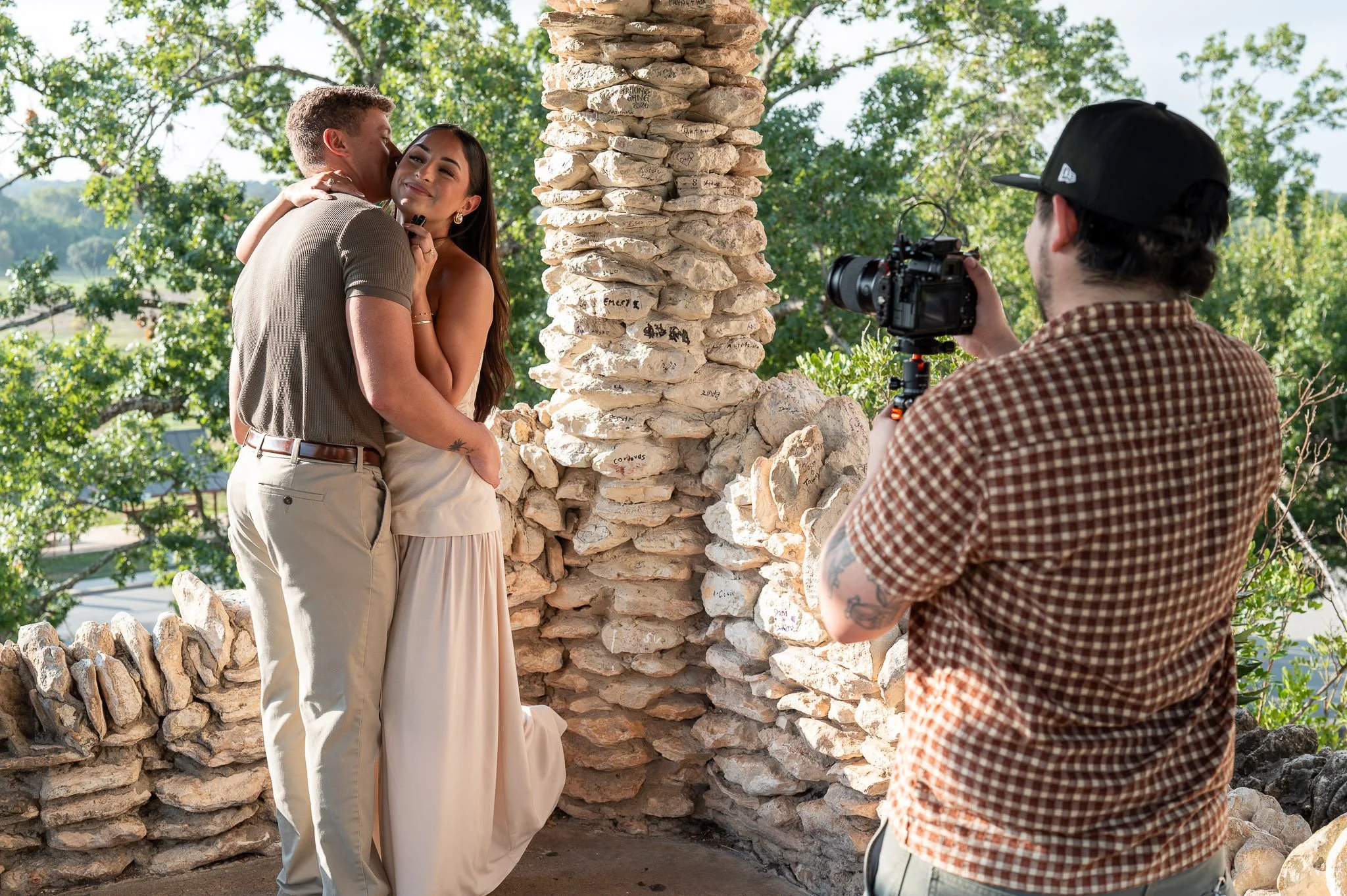
A proposal happens once, and more couples are choosing to have it recorded two ways: photographs and video. Dalton and Hailey did exactly that. They came in from Corpus Christi on a weekday morning, and Dalton brought a videographer named Aiden along with us to the Pedestrian Bridge at San Antonio's Japanese Tea Garden.
One Moment, Two Perspectives
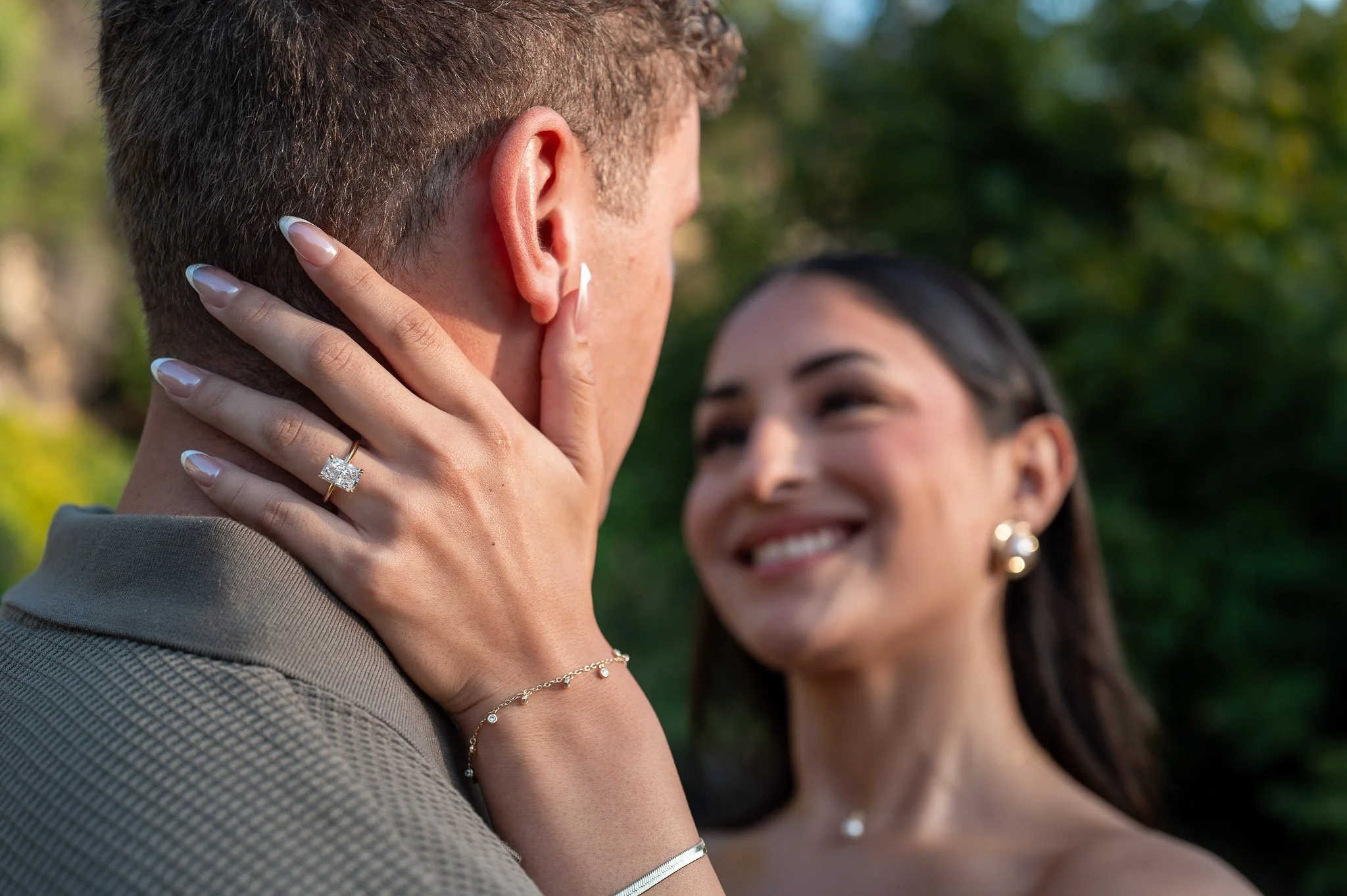
Photographs and video capture the same moment in different ways. A photograph holds a single frame still, the expression on Hailey's face at the instant she understood what was happening. Video keeps the sequence around it, the movement, the sound, and the words Dalton said in the seconds before he knelt. Together they cover what either one would miss alone.
The challenge is that a proposal cannot be repeated. Two people working the same moment have to stay out of each other's way, because there is no second take if someone steps into a frame or blocks a sightline.
How We Worked Together
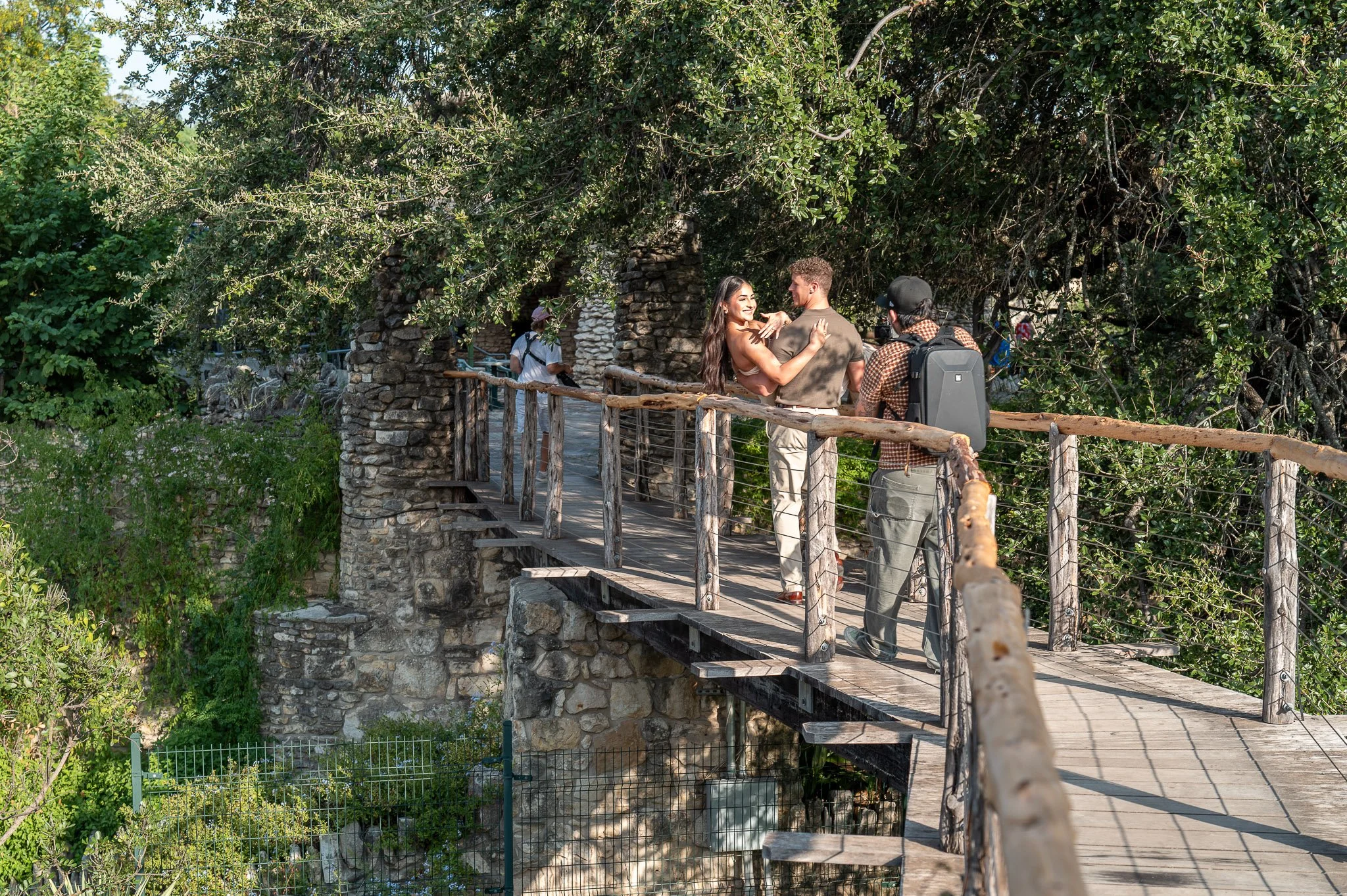
We spoke with Aiden ahead of the morning and settled the plan. During the proposal itself, Aiden gave us the lead. He stayed close and captured video around what we were doing, working around our positions rather than the other way around, so the moment unfolded without anyone crowding it.
That arrangement made the biggest difference. Because one of us took the lead, Dalton and Hailey saw a small, quiet crew rather than a crowd, and the moment stayed theirs.
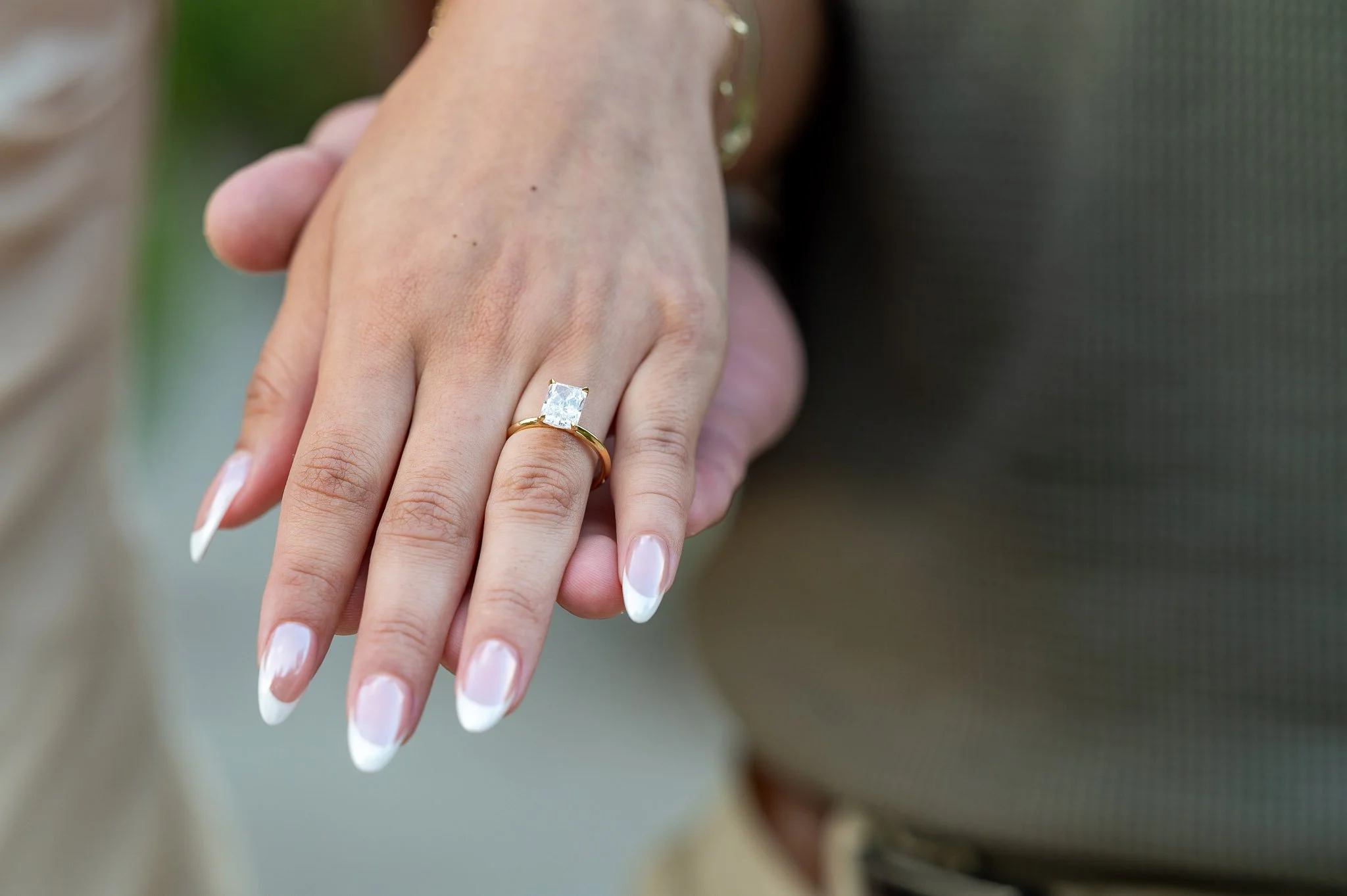
The Proposal on the Bridge
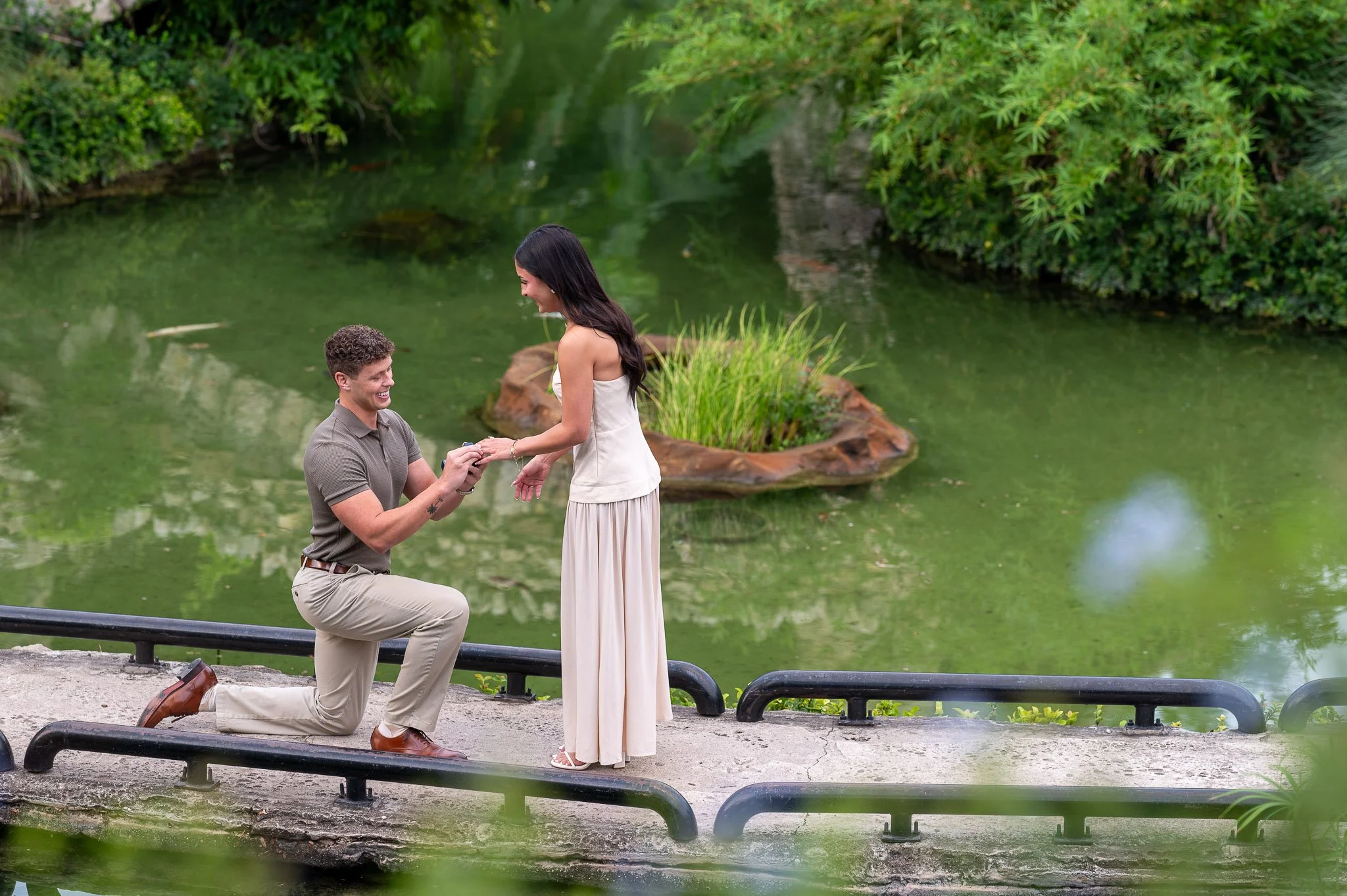
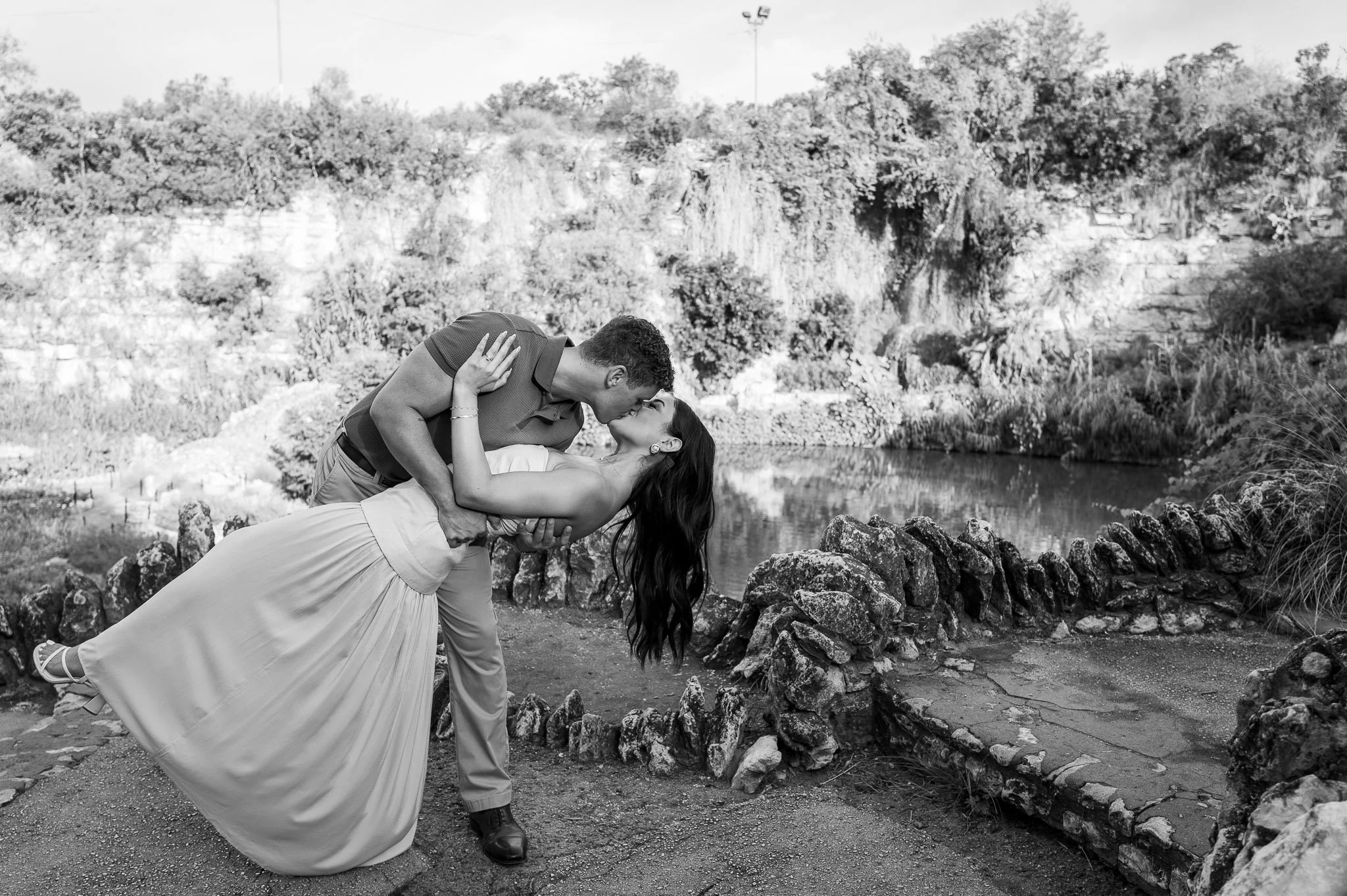
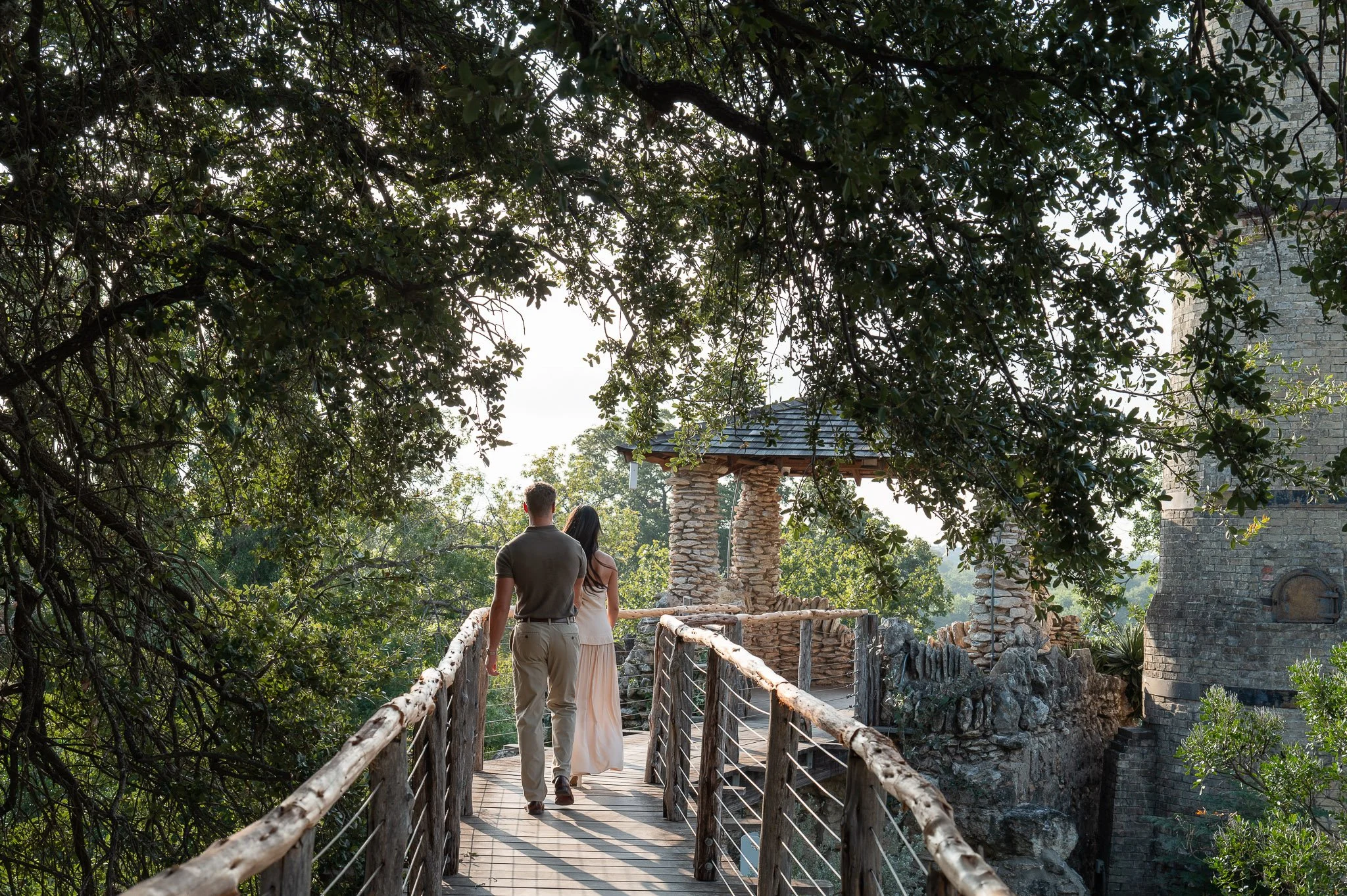
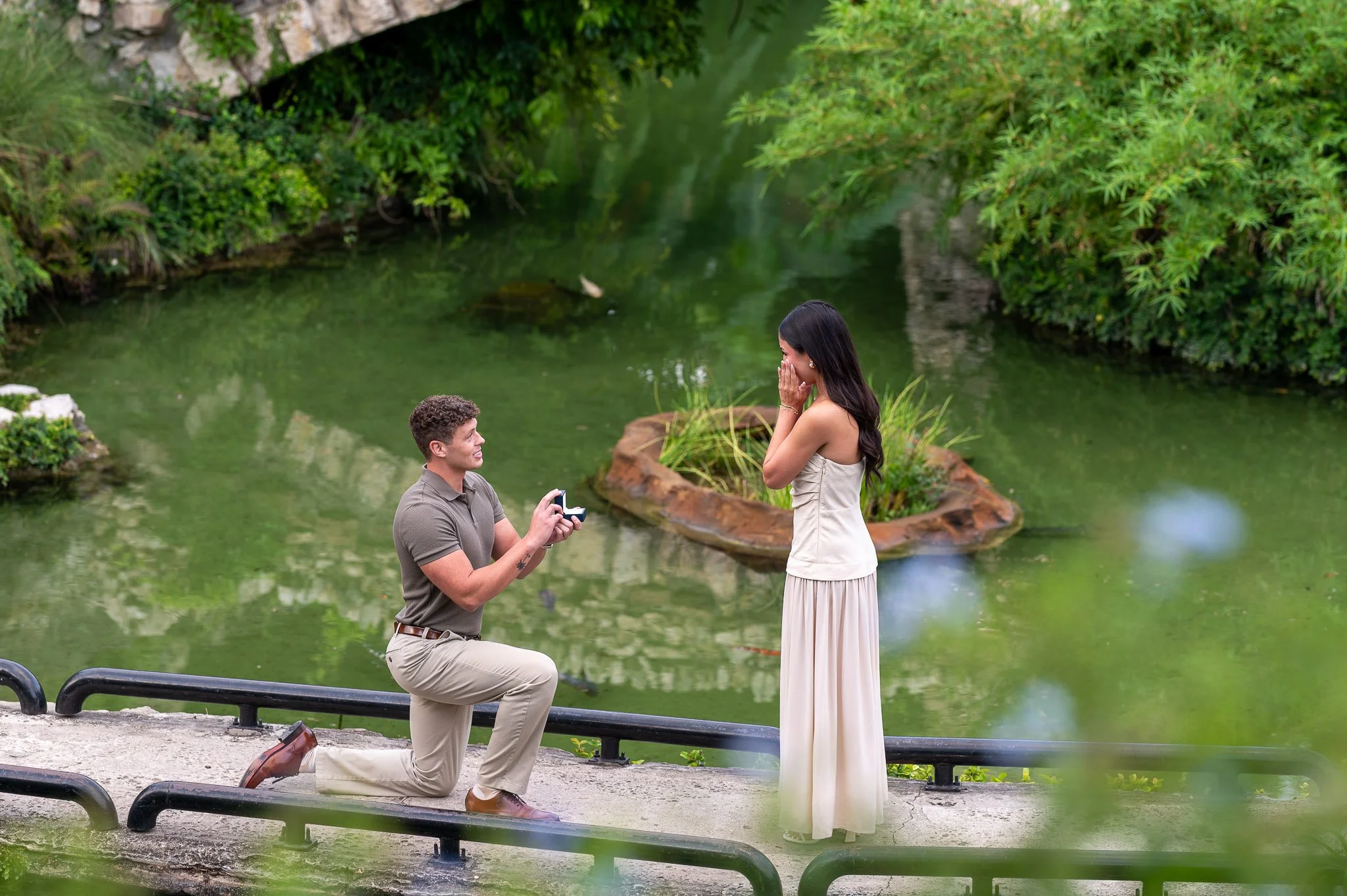
Dalton brought Hailey to the Pedestrian Bridge early on a weekday morning, when the Japanese Tea Garden is quiet and the grounds are largely their own. With a little distance between us and the couple, Dalton got down on one knee, and Hailey's reaction was immediate. We stayed in position and let it play out, with Aiden's camera working just beside ours.
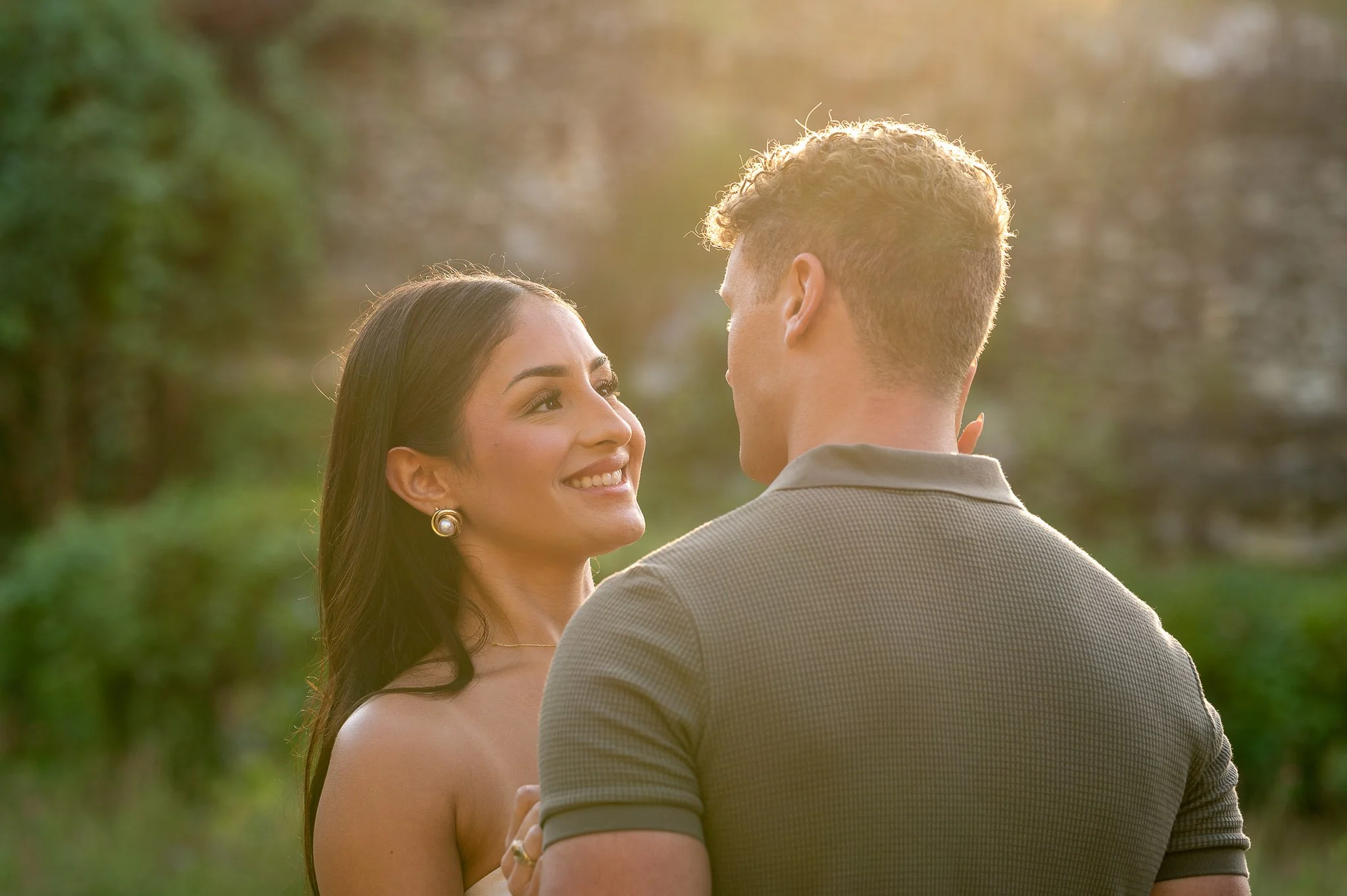
After the Yes
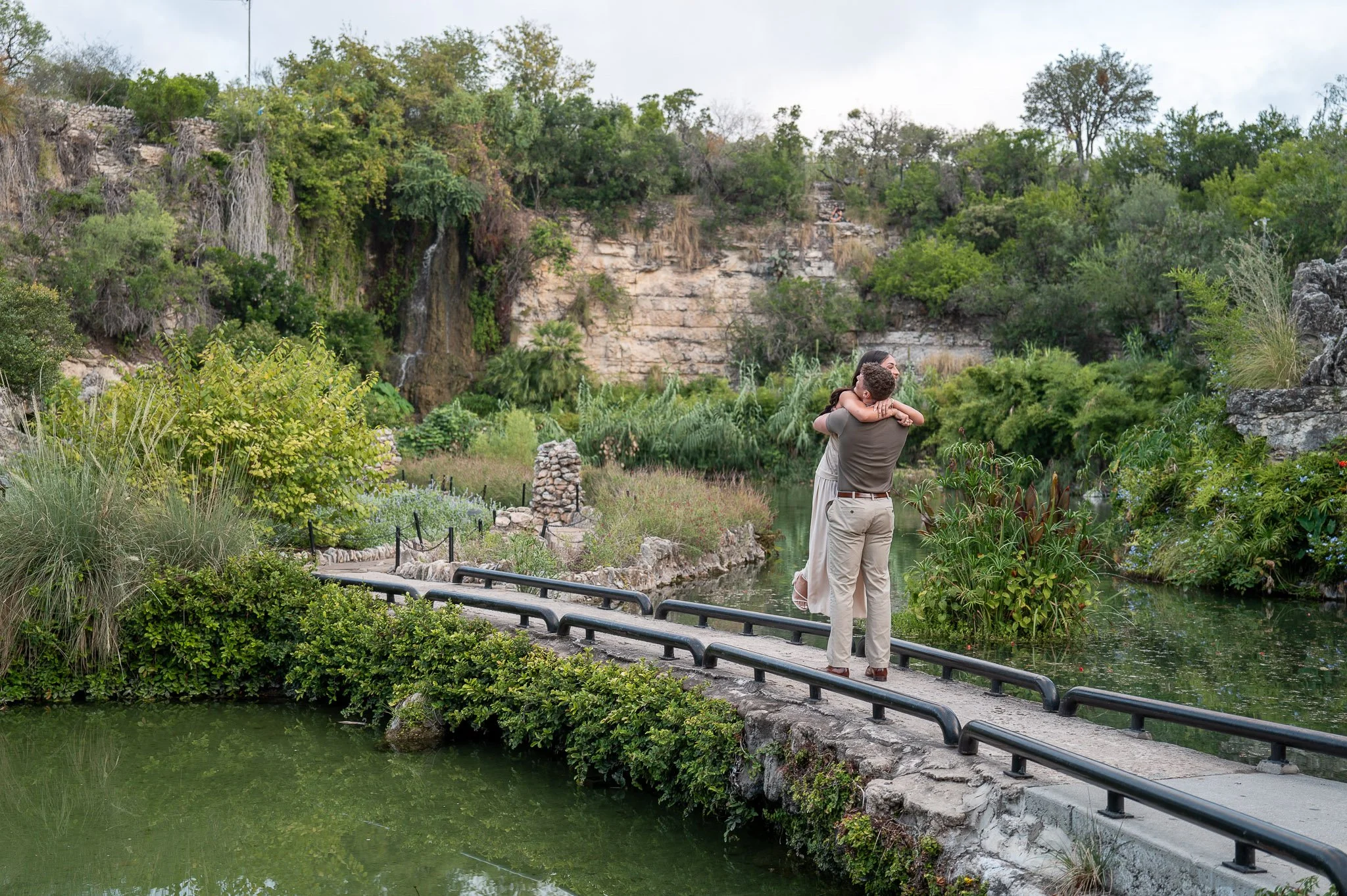
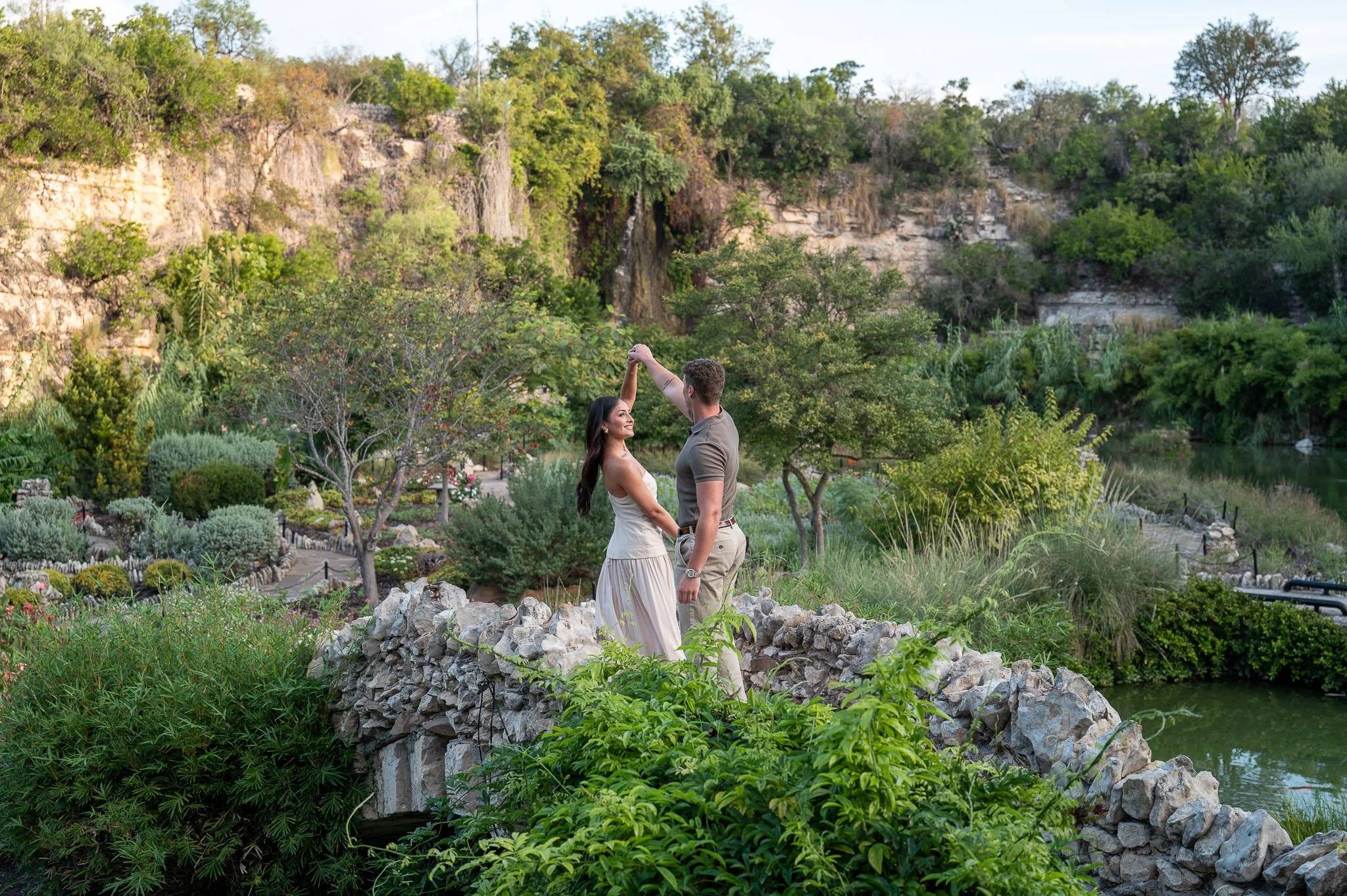
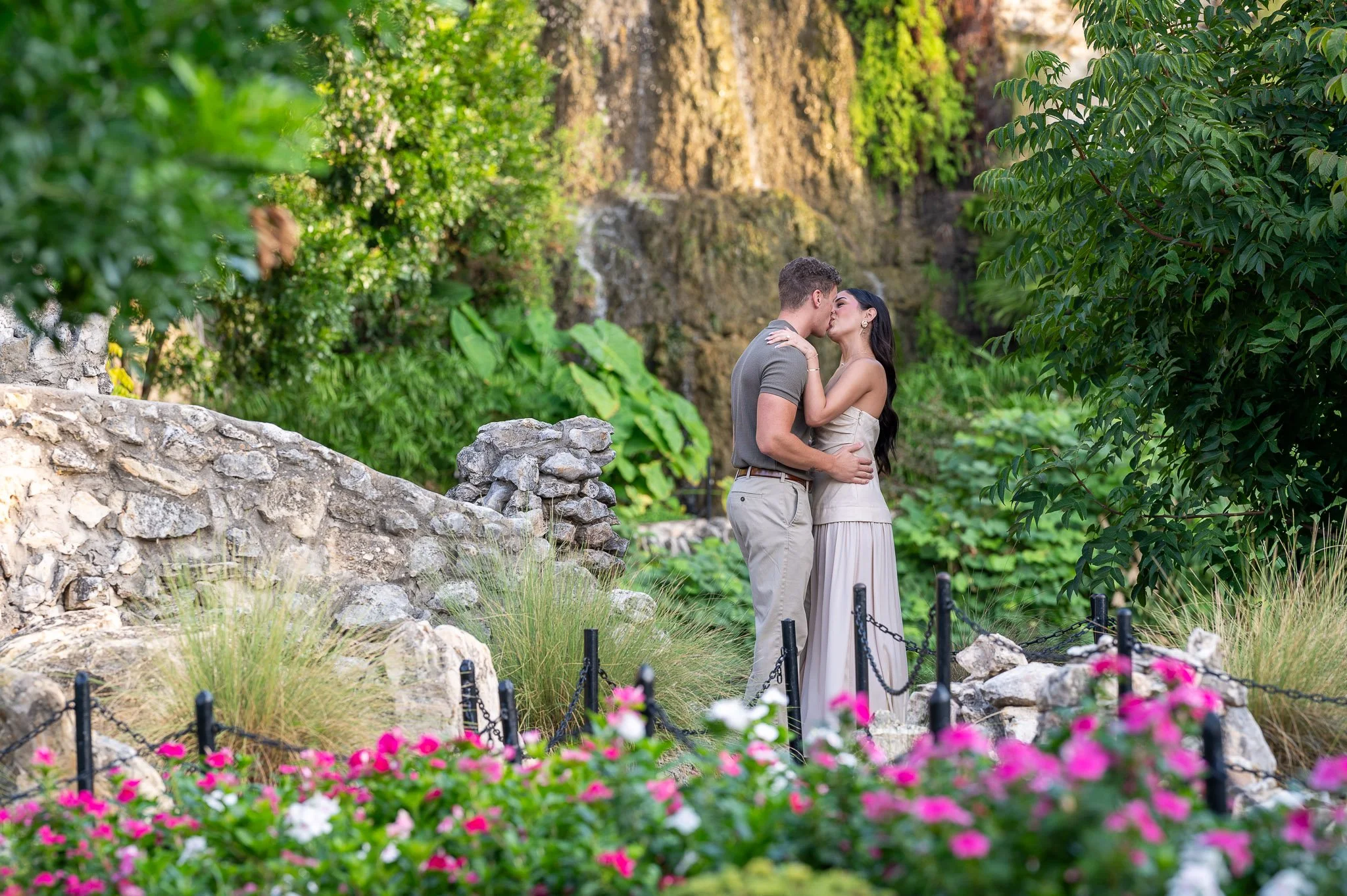
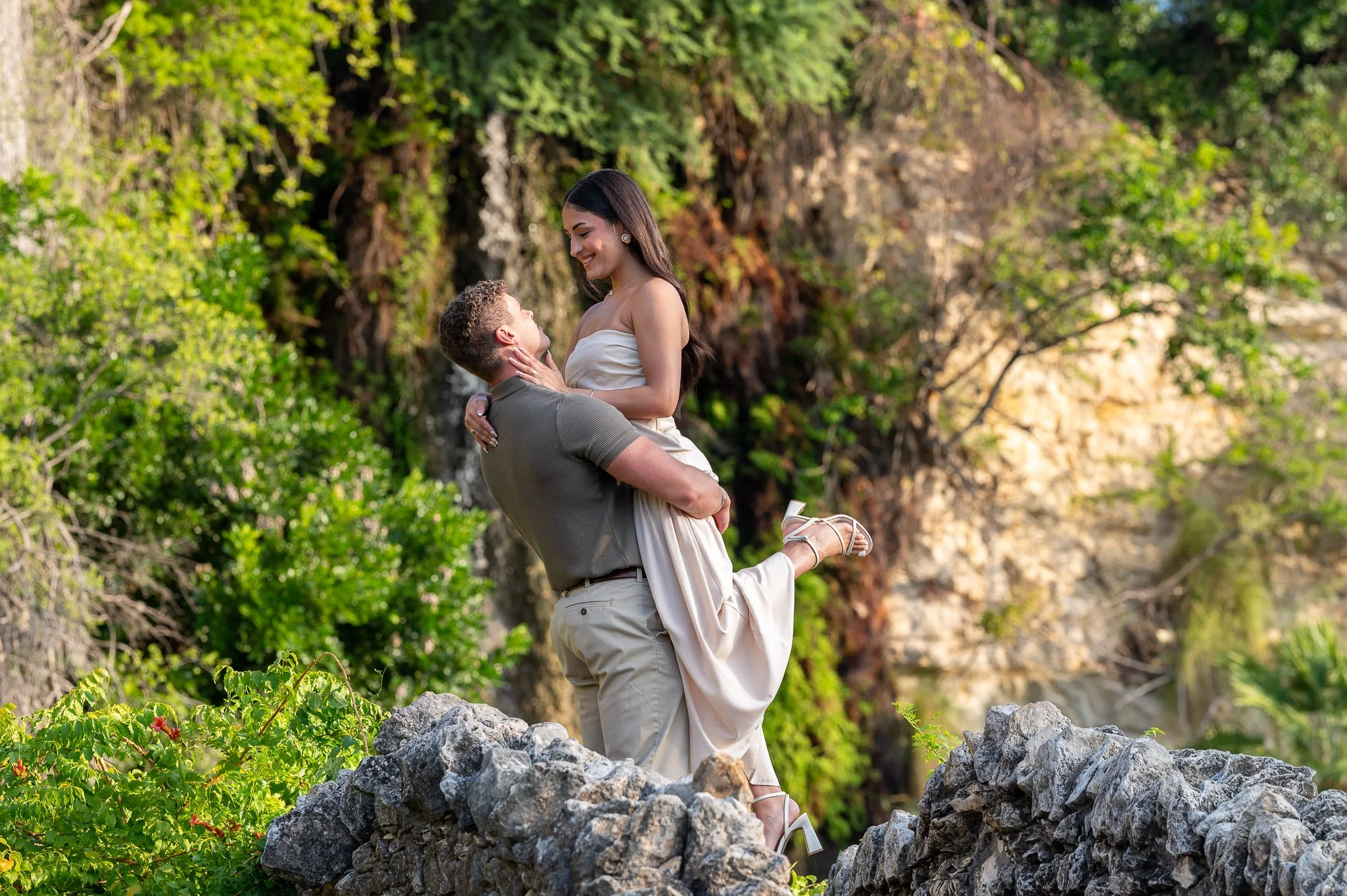
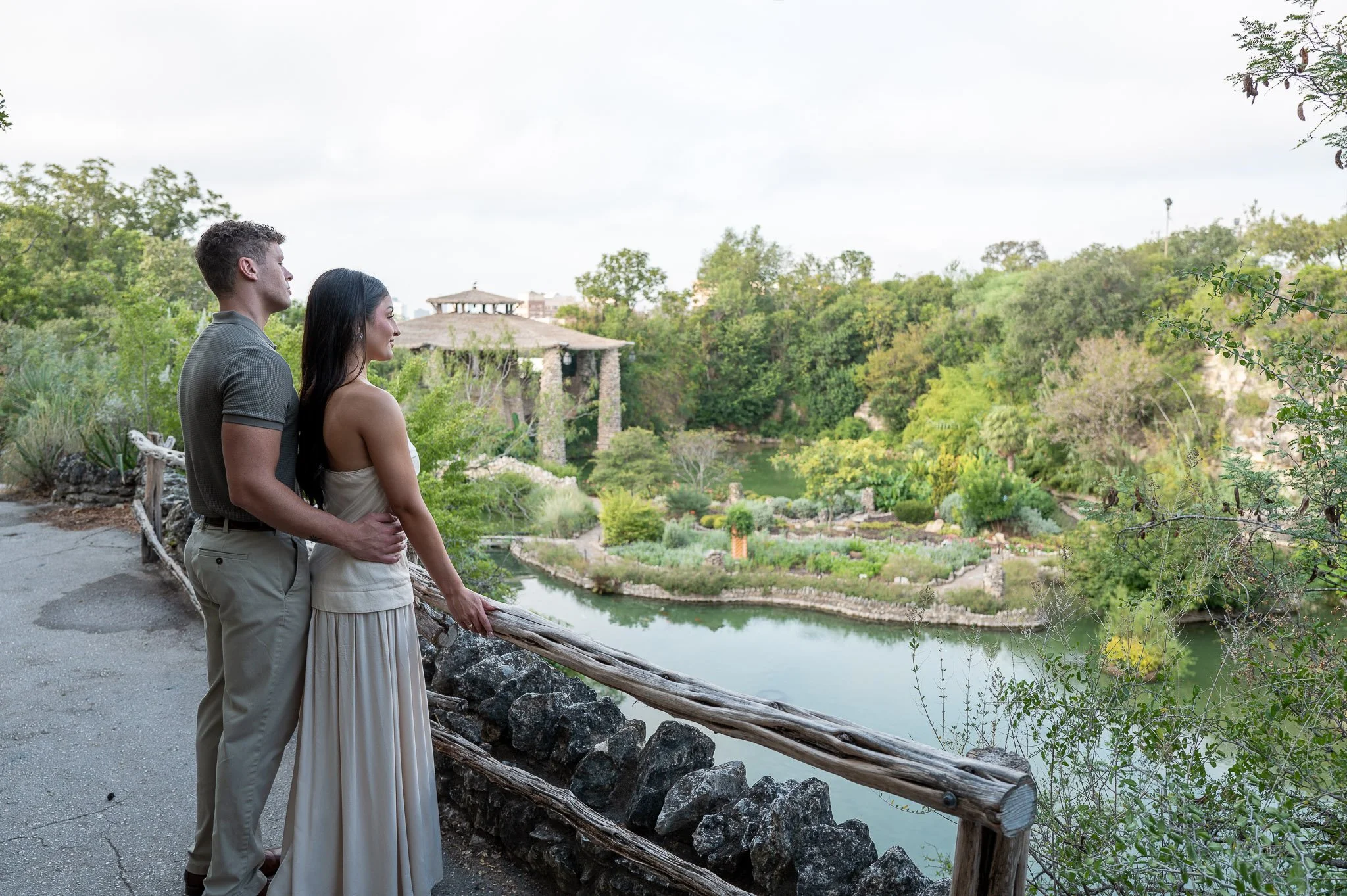
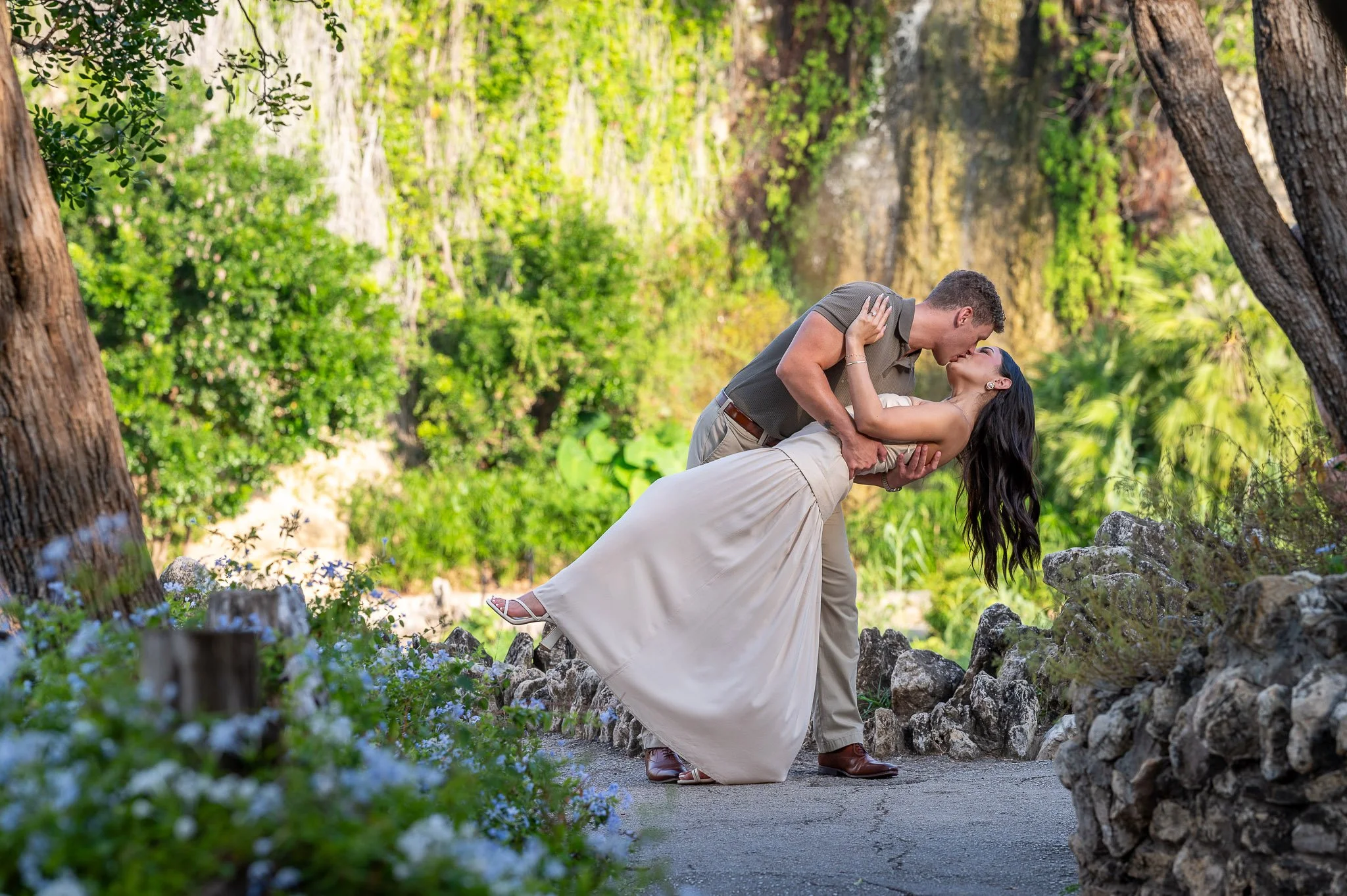
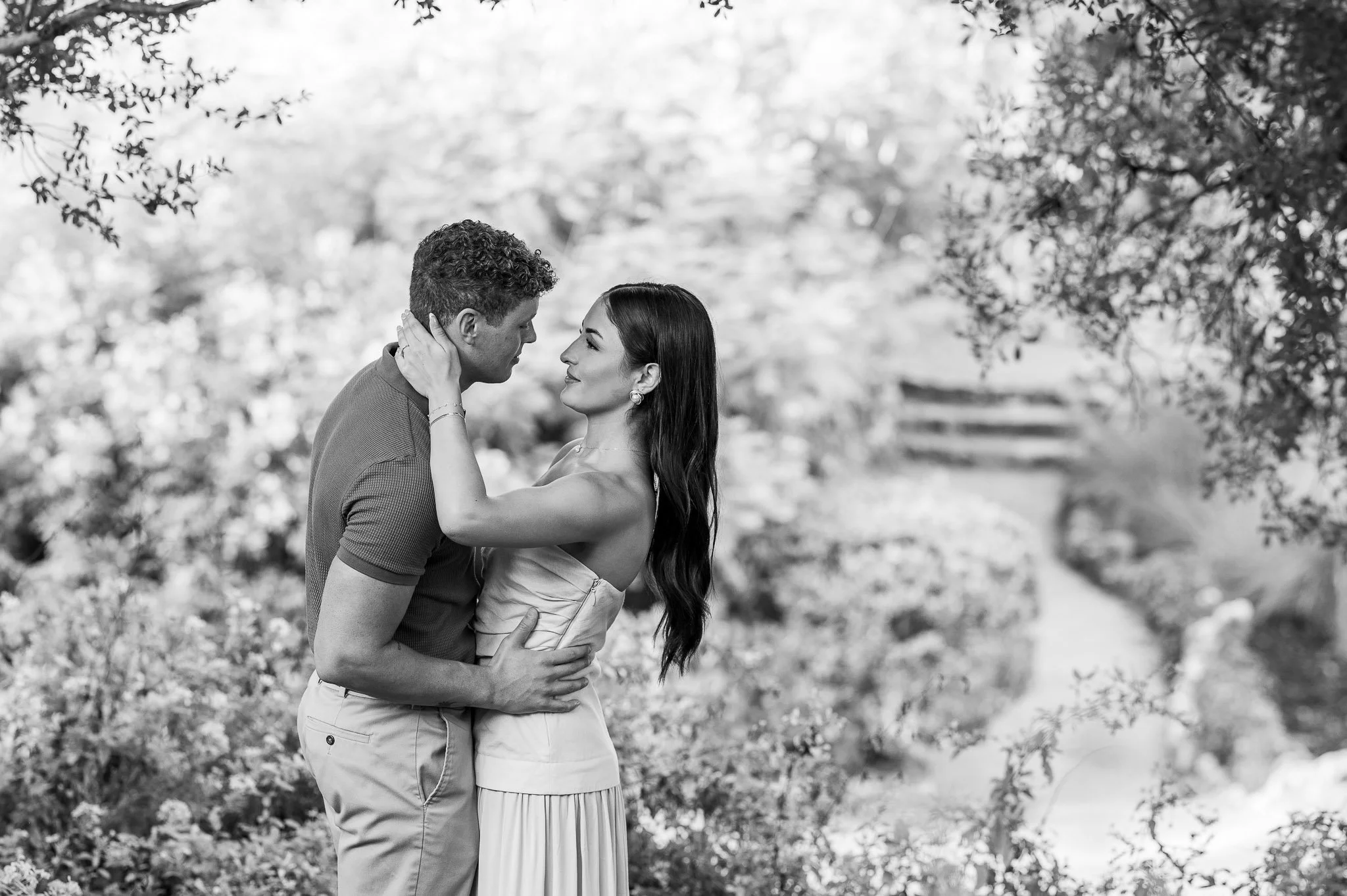
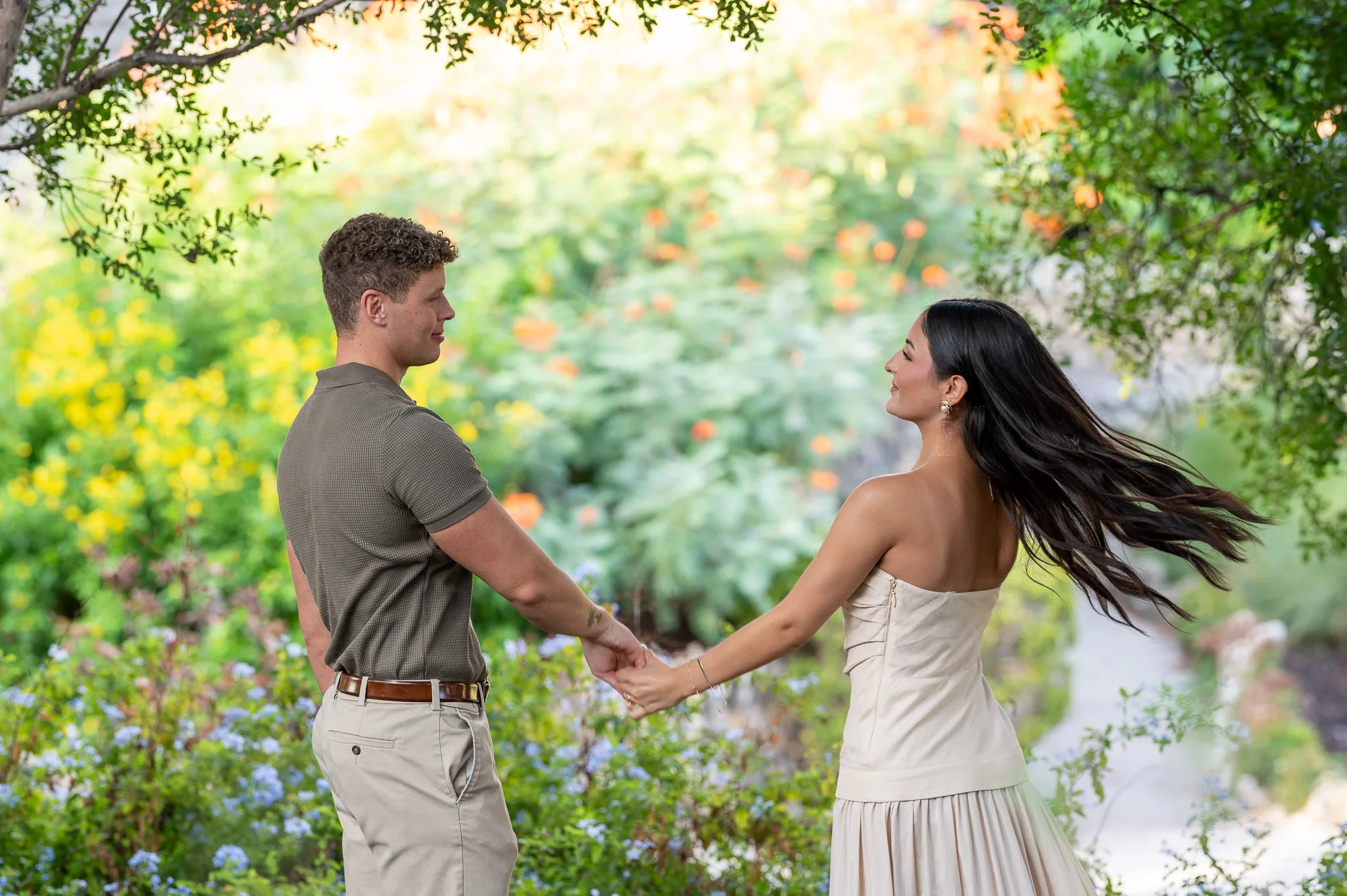
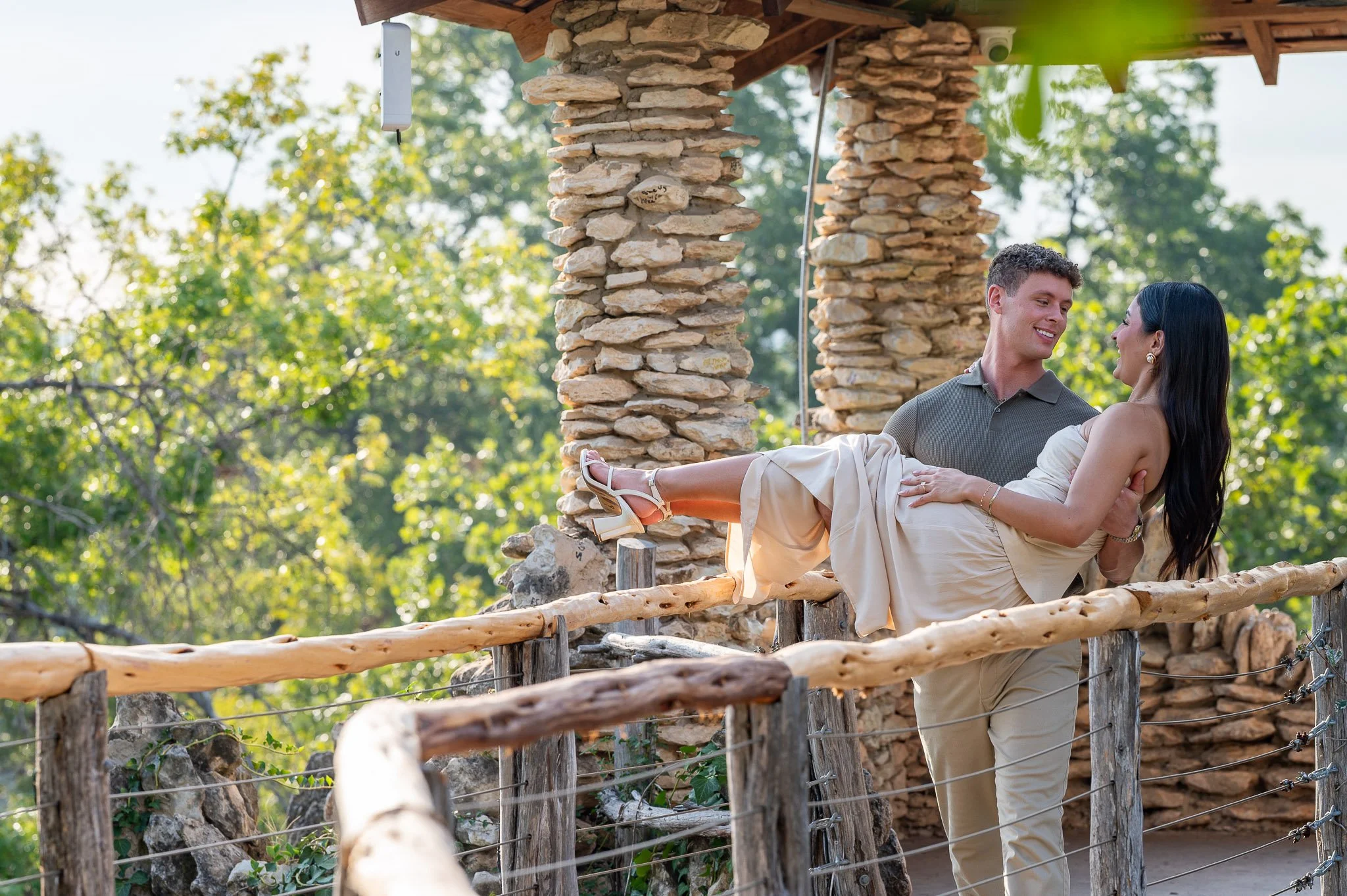
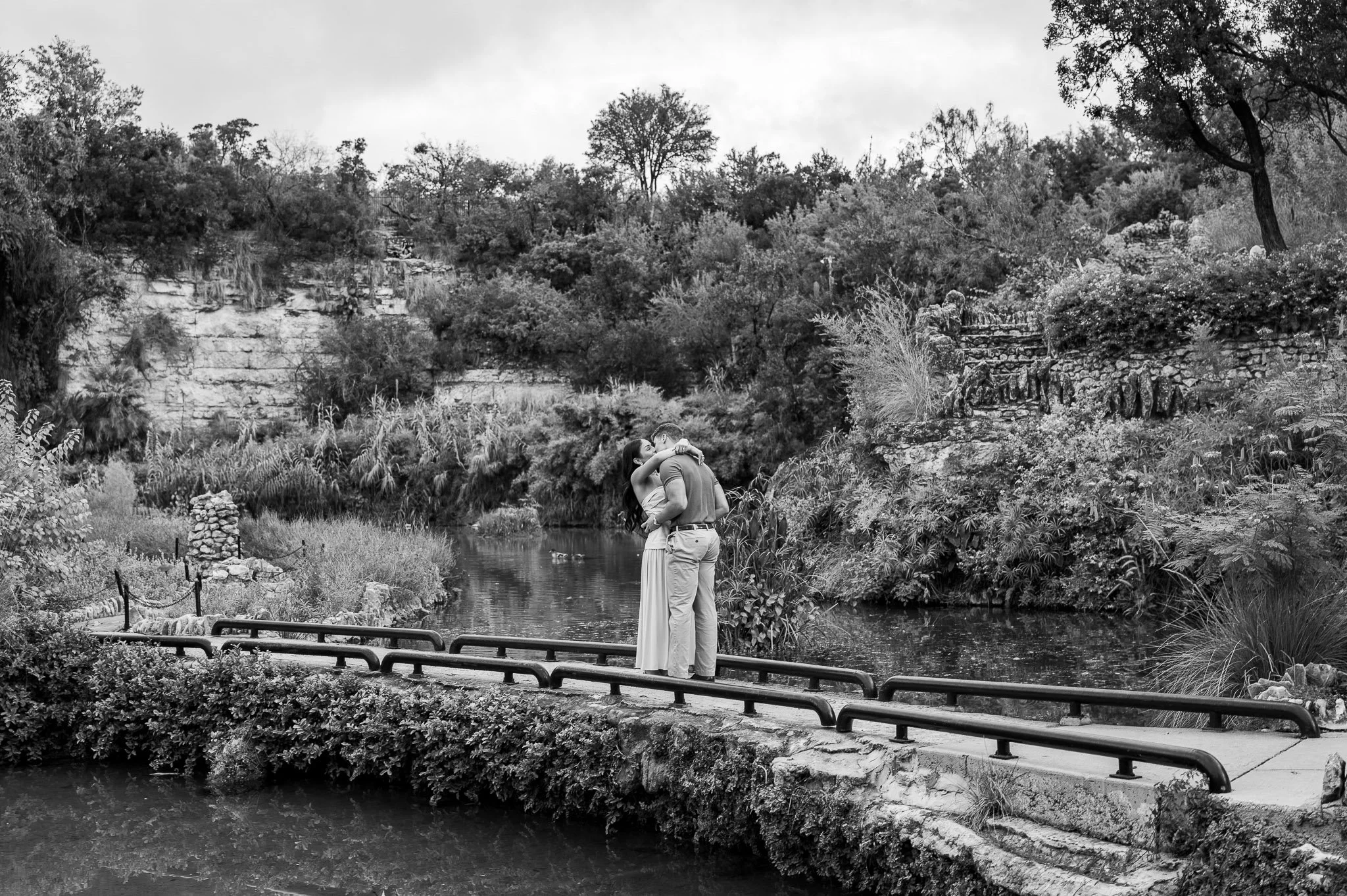
Once the proposal was over, we shifted from capturing the moment to building the rest of the session around it. Dalton and Hailey moved through the garden in a few separate sets, and during each one we handed off a stretch of time for Aiden to gather his own coverage. That meant he was not trying to fit video into gaps in our work. Each set had room for photographs first and then dedicated time for video, so both of us ended up with a complete record of the morning.
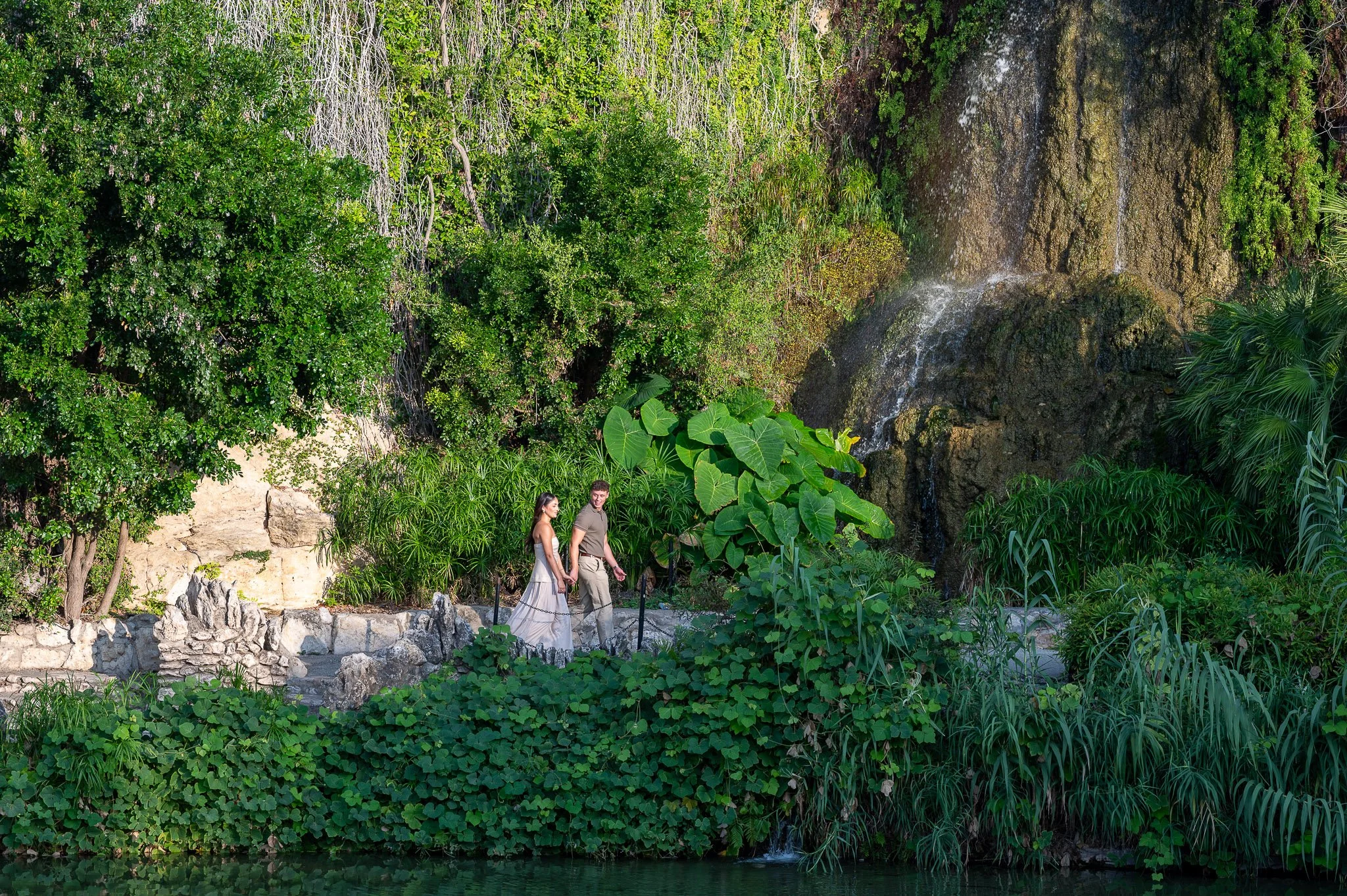
Why a Weekday Morning Works
Weekday mornings tend to be the quietest hours at the garden. Fewer visitors means fewer people passing through the frame, and it gives a photographer and a videographer room to position themselves without bumping into each other or into strangers. For a proposal that two crews are recording, that extra space is useful.
Frequently Asked Questions
Should you hire a videographer as well as a photographer for a proposal? It depends on what you want to keep. Photographs preserve the expressions and details, and video preserves the movement and sound. Many couples value having both, especially for a moment that cannot be repeated.
How do a photographer and videographer share a proposal without getting in each other's way? Talk through the plan beforehand and agree on who takes the lead during the proposal itself. Afterward, build time into each set so both can work without competing for the same position.
Is a weekday morning better for a proposal with two vendors? Often, yes. Fewer visitors at the Japanese Tea Garden on a weekday morning means more space to work and fewer interruptions.
For more on why the Japanese Tea Garden works so well for a proposal, including timing and lighting, see our Japanese Tea Garden proposal guide.